Promoting higher education in a country previously plagued by armed conflict is a big challenge. This is so in Nepal, which in 2006 emerged from 10 years of maoist insurgency that had ripped the country at its seams. The armed conflict resulted in over 15,000 deaths, an estimated 150,000 people internally displaced, the disruption of rural development activities, and the overcrowding of town and urban centers. The course of the civil war in Nepal is best postponed to a separate discussion. It is only mentioned here in order to paint a picture of the education conditions faced by young Nepalese as a result of the war.
An entire generation of Nepalese characterize their educational experience with images of school disruptions, weeklong close-downs and lock-outs, bombing incidents, and unsafe conditions. They recount the violent strikes that closed down public and private establishments in major centers, relegating the economy and all social services to a complete standstill. They remember the instability that brought about the near collapse of the country’s major source of GNP, tourism. They explain why scores of young and able Nepalese started traveling abroad, seeking education and fortunes away from a country where no hope of opportunity for a future seemed evident.
Five years have gone by since the official end of the conflict, and a year has passed since the final stages of integration and the beginning of reconciliation. A general strike still rocks the economy every now and then, as opposing political alliances vie for power in the fragile democracy, but the overall security condition is considered vastly improved. There is a different ambiance now in Nepal. Like a child eager to grow up fast in order to compete with its older siblings, Nepal is a country characterized by awakening, enthusiasm, and even a tinge of impatience.
Today, majority of Nepalese students prefer to stay in their home country, close to family and friends, and there carve out a career in Nepal’s growing industries. A big number see this as their social responsibility. Theirs are the minds of adult hungry for knowledge, not only for that which is available in their country and region, but from all around the world. Growing internet access further feeds this hunger as students get to know more about the outside world. They exchange news and opinions with diverse populations almost on a daily basis. They learn about various lifestyles, global issues and concerns, and the types of struggles that inform the social awareness of the people of their generation. This exposure through virtual socialization is driven by the desire to become global citizens despite the confines of the borders of their himalayan home.
How then should we educators feed this hunger for knowledge, while at the same time preserve Nepalese identity, culture, and knowhow? By combining local knowledge with global innovations and progressive ideas – this is the key. Crucial is this “hybrid knowledge,” borne out of local capacities, fed by international exposure. Certain ingredients are important for this approach to succeed, and they are:
1) Developing critical thinking and analysis, the ability and willingness to question, search for answers, and critique existing knowledge;
2) Strengthening national pride and sense of social accountability;
3) Adopting cutting-edge technologies in education execution, particularly in the use of social media, multi-media, and other instruments accessible to the infrastructure-challenged Nepalese.
The strategy involves the development of an educational approach that is centered on local needs, powered by relevance, enhanced by global innovation. In this way, the education sector will indeed become a primary contributor to Nepal’s emerging status in the world community.
Next: Recommendations for implementing Needs-and-Relevance-Centered Education in emerging countries.
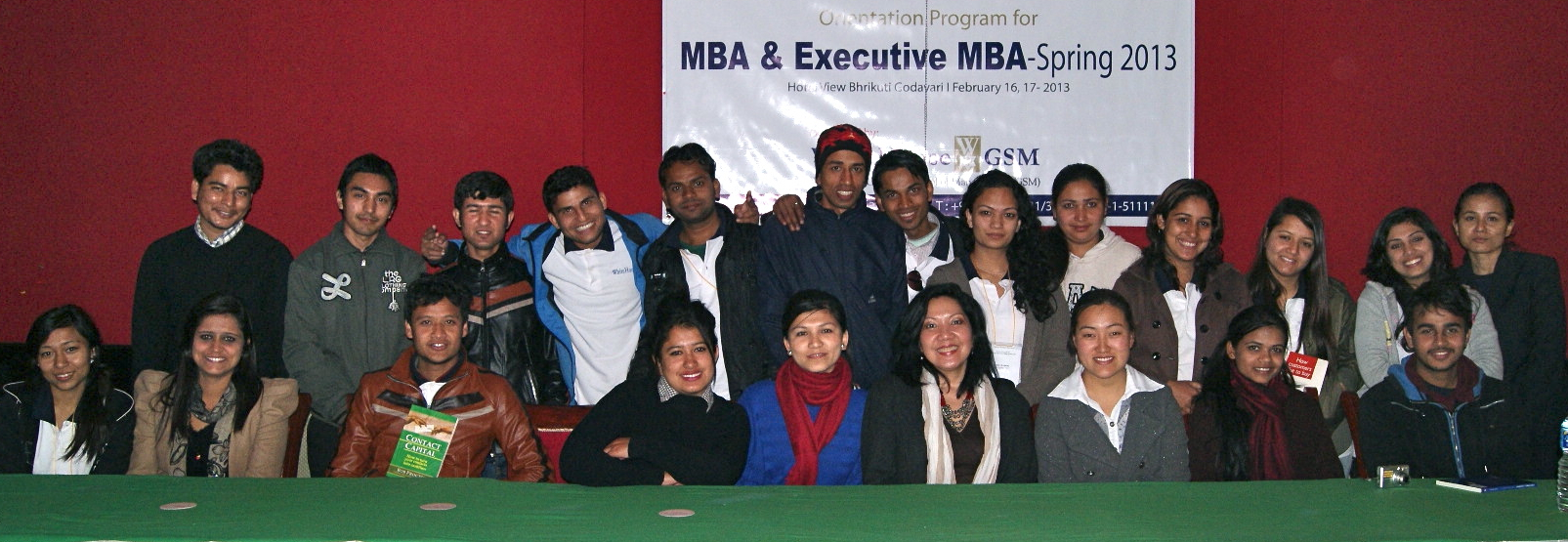
(the author, front seat 4th from Right, with her MBA class in Kathmandu)