Unknown's avatar

About Edessa Ramos

Humanitarian Safety and Security, Social Entrepreneur, Capacity-Builder, Emergency Responder

The Power of Education for Children in Crisis Zones

I look back on many past encounters with families in crisis countries, especially children and their mothers. I have spent 2 decades of my professional life in Nepal, Iraq, Syria, and now in Ukraine. But one recollection resonates with me in deep emotional shades of clarity. It was back in 2017, inside the pediatric ward of the Mosul General Hospital, where I was a volunteer medic during a time of violent conflict. Our team of doctors was treating Dahlia (not her real name), a 13-year old child with war-inflicted wounds, including internal injuries that required surgical repair and a diverting colostomy. The doctors monitored her condition day and night while our psychosocial counsellors assisted in her recovery from psychological trauma. 

Dahlia was only ten years old when the violent extremist group known as ISIS took over Mosul. She witnessed the execution of friends and family members. Her family hid her in the basement for over six months until they were eventually discovered. She was taken to the ISIS-controlled hospital where she received improper treatment for her injuries. What she endured there was too horrific to describe. After several months of medical and psychological care, she did recover, much to our joy and that of her parents. When she was mobile again, she visited our counselling center regularly. That was when her mother came to me and asked, “Is there a way my child can access books? Not religious books, which was the only thing made available to her, but books about the world. Can you help her improve her reading? She wants to learn everything.”

This touched me so deeply that I said yes, all the time wondering how, in a time of war, I could possible find such books in Arabic. I remember driving through dangerous territory to make it back to Erbil in the Kurdistan Region of Iraq, where I could shop for books in Arabic. It was not easy, for most books were in Kurdish, and there was no possibility to safely travel to Baghdad and search the bookshops there. But I did find a few, and other volunteers started collecting from their neighbors. I had to drive the perilous roads between Mosul and Erbil more often than our security rules would allow. But it was necessary, as I could hardly catch up with the speed at which she was reading.

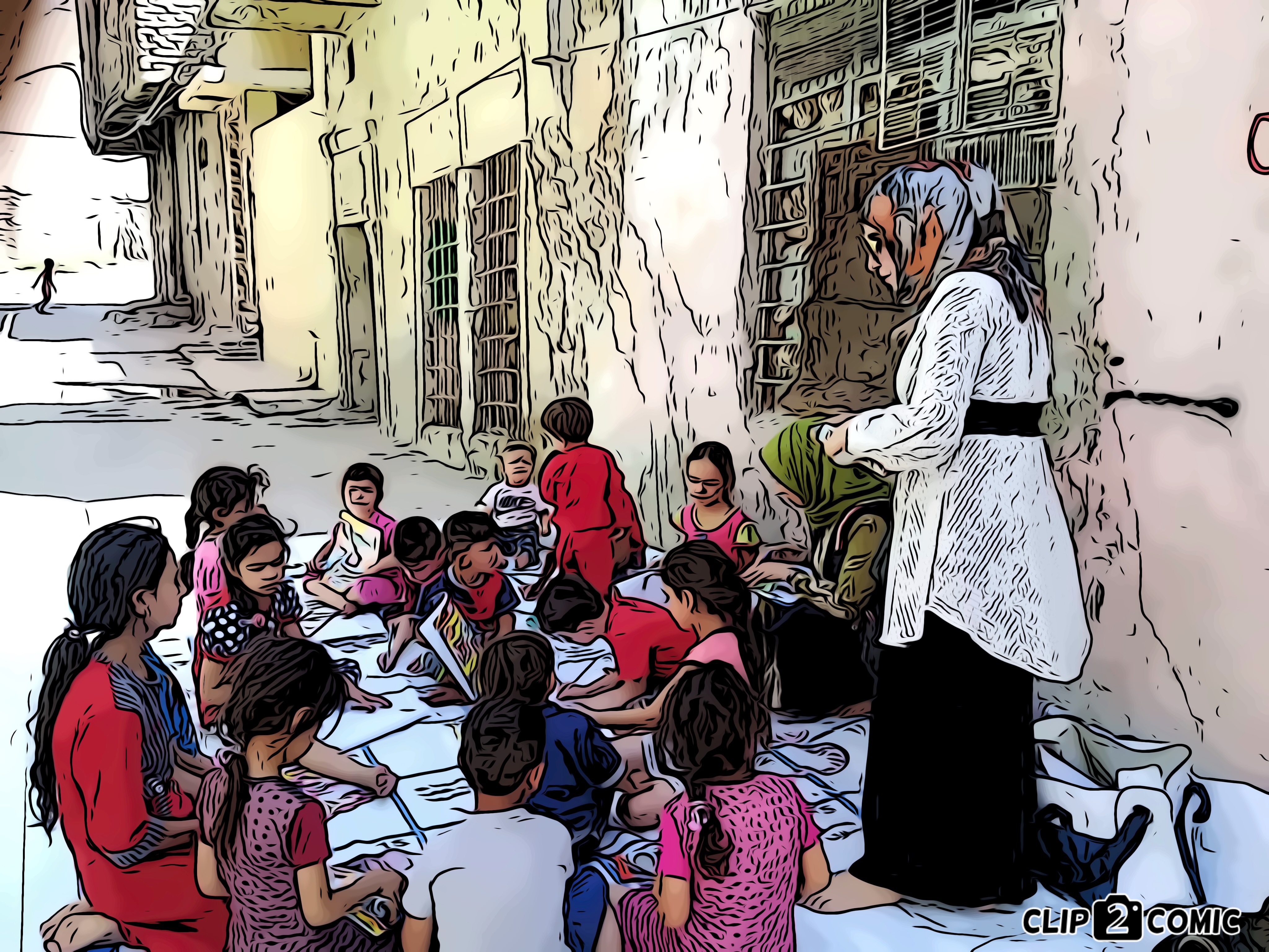
Amalna teachers conduct outdoor classes for children in Mosul.

After her successful recovery from the physical and psychological wounds a year later, Dahlia started volunteering in our program for war-affected children. She helped facilitate art therapy sessions for the small children. She improved her writing skills and started learning English, at the same time teaching other children in the literacy and life skills classes. The schools in Mosul did not open until much later, but Dahlia remained a voracious reader. Later, at age 16, she joined the knitting classes where she learned about life and recovery from women and older girls.

I stood in the classroom one day and watched her pinning artwork to the wall. This is the power of education, I thought. For children like Dahlia, it was a lifeline, the path to recovery and traumatic growth, the realization of a dream.

If we can build education projects and systems that can do this, that aim to do this, imagine what a kind and beautiful world we can build.

About the author: My name is Edessa Ramos and I worked in the humanitarian sector for 11 years in Iraq and Syria. In my spare time, I volunteer as a medic and mental health practitioner in crisis countries. I am currently doing this in Ukraine. – 27. March 2025

A Grassroots Response to the Earthquake in Nepal

Our love and prayers go to the people of Nepal. Up to this moment, we in Europe are still busy contacting our colleagues, friends and families in Nepal, many of whom still have not marked themselves as “safe.” Strategic Edge International has been working in Nepal since 2013 on disaster preparedness, training and organizing NGOs, INGOs, and grassroots communities to develop empowered individuals who can take care of themselves, their loved ones, and their neighbours in the event of an earthquake. I was just in Kathmandu last week teaching Light Search & Rescue to Swisscontact, a local organization that manages youth employment programs. I returned home to Switzerland just 2 days before the earthquake struck. How I wish I hadn’t left, for then I would be on-site helping people and looking for my loved ones in the disaster-struck areas. It was an astounding coincidence, certainly unintentional, that we were able to complete the training just before the big rumble. We thank the Almighty for that.

Our deep regret is that we weren’t able to train more people, that our plan of going directly to the communities, neighbourhood to neighbourhood, to train and organise them, did not materialise quickly enough. The lack of funding and resources was not the obstacle. We simply ran out time.

In the news and on the internet, everyone is asking why Nepal was caught unprepared by an earthquake that they knew was coming. My question is, why didn’t the world help Nepal, when the world also knew that the big earthquake could strike anytime.

Today I saw an article talking about the experts who went to Nepal the week before the earthquake to plan and assess. But it seems that they did more questioning and complaining about the lack of preparedness than on implementing any useful recommendations. It struck many of us as arrogant and condescending, when experts talk like this, especially post-disaster, almost as though they blame the Nepalese for the tragedy. This is condescending; sheer arrogance that is made even more disturbing after the predictions came true.

On CNN, all over the news and on the internet, it is blatantly implied, and in fact many ask pointedly, why Nepal was caught unprepared by an earthquake that they knew was coming. Perhaps the better question is, why didn’t the world help Nepal in their preparations, when the world also knew that the big earthquake would strike anytime?

It is not true that the Nepalese did not prepare. They tried valiantly, but no one really helped. Citizens’ preparation efforts over the past 2 years did not get much support, and certainly not enough attention. In the communities, and through organisations like Women Empowerment Nepal (WEN), the local people were aware, and they were worried, and they did what they could. But we all know how hard it is to undertake such efforts, let alone sustain them, when poor communities have no materials, no equipment, no instructors. No donor was willing to fund preparedness programs, and many poor communities have no access to donors or NGOs in the first place. For the past two years we’ve been fighting to call attention to the issue of supporting local efforts. Grassroots organisations like WEN tried to empower themselves despite the lack of resources. Community leaders went on local radio broadcasting instructions on assembling go-bags, organising rescue teams, identifying secure shelter. The people knew what they needed beforehand – tents, WASH kits, gloves and hardhats, first aid kits, and so on. But they have no access to these. Their funding applications met with refusals, and still they plodded on. Many of the efforts were led by women, who themselves had to struggle under the weight of gender-based challenges in a society like Nepal. Six months ago, I discussed a proposal with Deputy Prime Minister Prakash Man Singh, and he was very interested, but he needed time to look for funding. And then time ran out.

Today the international community is rushing to send aid to this devastated mountain country. We trust that aid agencies will consider the above-mentioned points in their response programs. The Nepalese are strong and resilient, and they know what they want, what they need. As of this writing, colleagues and friends update me on the fact that, as they go from shelter to shelter, they have not seen any aid representative, only Nepalese rescue teams. But they are not waiting for aid. The survivors pulled themselves together and started distributing noodles and WASH kits, just as they dug through the rubble with bare hands to rescue people. They are appealing now for financial support and resources so that they can continue to do so.

Nepal is having difficulty coping with the massive influx of people arriving to help. Many of the volunteers have no idea how. Many experts do not speak the language or have never even been there. Aid agencies are busy meeting and coordinating, gearing up for needs assessments. We can only hope that all these will not burden an already traumatised people. Questions about needs, for instance, will only generate community fatigue. The Nepalese say, at least from the messages they are sending, is that they need support to be channeled direct to the communities, meaning, the local organisations that have no access to international donors, the neighbourhoods who are coping with survival, people who are not reached by government and agencies. We must trust the Nepalese, not only in their incredible resilience and courage, but in their capacity to undertake their own recovery. They have enough people in Nepal; what they lack are resources and funds. We can only hope and urge aid agencies to partner directly with the grassroots, and to really listen to them and enable them to make the decisions.

We continue to urge that community-based disaster preparedness efforts be given the support it did not enjoy before. It is a major path towards resilience and community sustainability, especially as we know that more disasters are sure to strike this high-risk country in the years and decades to come.

Now is not the time for regret over how things could have been done better. Today we focus instead on helping the people who continue to dig through rubble, who huddle in uncertain places, needing food, medicine, shelter, and supplies, and yet helping each other even as they struggle to keep themselves alive.

Today we are launching the Women’s Earthquake Recovery Initiative for Nepal. We focus on the communities, on the ordinary individuals – the clothing designer, the shoe seller, the artist, the fruit vendor – who lost everything, who most likely cannot access aid agencies. It’s hard enough to make a living in a poor country, most especially for the women, whose businesses are now destroyed. Gone are their homes, their projects, their means of livelihood. It is said that women are most vulnerable during disasters, as the burdens they carry and the inequality they suffer in society are magnified by the uncertainty of a devastating event. This need not be the case in Nepal, if we get active today. In fact, the women can lead this recovery initiative. They will be the priority, as well as any household that has lost a female member and where male partners and children are now coping on their own.

Donations will go directly to organisations in the two hardest hit cities, Kathmandu through  Women Empowerment Nepal, and Pokhara through Three Sisters Adventure Group. It will provide emergency care, psycho-social counselling, and the reconstruction of their businesses and means of livelihood. By helping them rebuild, we help rebuild their entire society.

On the last week of May, when the mad rush to this grief-stricken country has subsided, when the Nepalese have had the chance to take stock, I will travel back to Kathmandu with the supplies that our organizations there are requesting, for by that time their current supply would have run out. It is a modest effort, in no way comparable to what big agencies can provide, but it is a grassroots effort, from you and me to the Nepalese. I am just the conduit. And all together we can do this.

Edessa Ramos is founder & executive director of Strategic Edge International, a social enterprise duly registered in Switzerland and Nepal, committed to providing safety and security services to humanitarian workers and affected communities. Edessa is also advisor to Women Empowerment Nepal, which she helped establish in Kathmandu in March 2013. WEN is a duly registered non-profit organization in Nepal that provides women and children with self-defense training, legal literacy, psychosocial counselling, and livelihood support. (Photo R courtesy of Khallika FB Photos).

Initiating Cultural Awareness: Training programs for personnel deploying to crisis regions

Note from the author: I visited Afghanistan a number of times during the period 2010 – 2011. During that time, I was a graduate student of Security Management and also starting my independent security consultancy, Strategic Edge.  I first wrote the following article in June 2012 as part of my studies. I feel that it is still relevant today, not only in Afghanistan or for the U.S. military and developmental efforts there, but for any project, both public and private, in any of the world’s crisis regions. Hopefully this can somehow contribute to any international effort of providing human security to at-risk populations.
ImageWhen a government agency conducts a significant number of programs and activities abroad, it faces the challenge of additional public pressure.  It is often under scrutiny to account for taxpayer dollars, and it must constantly prove cost-efficiency and the worthiness of its programs.

In the case of the Unites States, for instance, a significant amount of resources have been expended on the reconstruction of Iraq and Afghanistan, while simultaneously fighting terrorism. Operation Enduring Freedom provoked mixed feelings among Americans.  Many claim that it was a drain on the country’s resources, while the same critics have been unable to argue substantially against what makes it necessary and worthwhile.  The same goes for the Afghan First diplomatic policy and the developmental initiatives of the U.S. Agency for International Development under the State Department.  The DoD and DoS programs in Afghanistan are founded on the promises of reconstruction, democratic governance, rule of law, and enabling the Afghan government and its security forces to govern the country effectively, particularly on matters of its national security. The goal is to help Afghanistan become responsible and develop the capacity for its protection.  This approach is consistent with the pillars of U.S. national security: the triage of defense, diplomacy and development.

Harvard researchers Sull and Spinosa (2007, par. 1) wrote about the biggest challenge to program managers, and that is, how to translate promises into actual strategies, and translate those strategies into action.  Overseas reconstruction programs are full of promises.  Managers and directors, especially those hired on high-paying contracts, often bear the burden of proving, not only achievements and results, but concrete impact on project beneficiaries.  The pressure on programs and individuals is immense.  This is true not only for the United States, but also for countless other states under NATO who are investing heavily in reconstruction in Afghanistan, Germany being one of the biggest among them.  If these governments fail to prove the success of their programs in Afghanistan, the international community, will withdraw their support in this and all future efforts.  This will make program execution increasingly problematic, dwindling funds can be expected, and other agencies like the legislatures within these governments will tend to disengage and distance themselves as they rightfully refuse to be associated with failed programs.

Background

This paper came about in the process of exploring the dilemma faced by government personnel and contractors in conflict zones, particularly those in leadership and executive functions.  Attention is focused on the period of 2002 – 2011, the time in which the U.S. spent the most staggering amount of tax-payers’ money to rebuild the post-conflict societies of Afghanistan and Iraq.  Additional focus is given to program management contractors, as this is an area of study that the author is currently engaged in.  The experiences of the U.S. Defense and State Departments are also given particular focus because these agencies rely increasingly on contractual executives and workers.  This paper is made relevant and timely by the recent wave of questioning on the part of Americans – be they from the media, legislature, or civil society – questions that probe the billions of taxpayers’ dollars spent in Afghanistan.

Results for Taxpayer Dollars

Contracting out vital services in the war effort is a complex practice, and growing. In 2009, the number of U.S. soldiers on the ground in Afghanistan rose to roughly 58,000 and contractors rose to almost 74,000.  The military force grew further to an estimated 10,000 by the end of that year, and the numbers of contractors increased even more.  The price tag for all this goes up to $117 billion during the period of 2002 to 2011 (Dickson, 2011).  The war and reconstruction effort came under scrutiny after the non-partisan Commission on Wartime Contracting in Iraq and Afghanistan (2011) reported that tens of billions of dollars have been misspent in the war and reconstruction efforts in Iraq and Afghanistan.  The Commission reported on significant errors that contributed to the lack of program success.  One of the most notable is stated thus: “… An ill-conceived project that does not fit the cultural, political and economic norms of the society it is meant to serve, or that cannot be supported and maintained, despite how well it is managed.” 

There were other errors cited, such as poor planning and oversight by the US government, blatant corruption that doom project outcomes (Dickson, 2011), and services that were never performed or buildings that were never completed (Cole, 2009).  But the most essential for the purpose of this paper is the first error cited, that which refers to cultural competency.

The big question is whether executive leadership of these programs is responsible for the lack of results, and to what degree.  Can the lack of results be traced to the way program leaders were selected, in the qualifications yardstick that was used to measure their competency, or in the type of preparations they were given prior to deployment?

Failure in Program Execution: A Consequence of Cultural Insensitivity

In a study made by Jeffrey Bordin (2011), a Ph.D. and N2KL Red Team Political and Military Behavioral Scientist, cultural issues were identified as the root of incompatibility and crisis of trust between U.S. Soldiers and their counterparts in the Afghan National Security Forces (ANSF).  The result is the phenomena of ANSF-committed fratricide-murders.  Since May, 2007, according to Bordin, there have been at least 26 murder/attempted murder incidents by ANSF or ASG members against ISAF/UNAMA members, resulting in the killings of at least 58 Western personnel.  Most of these incidents have occurred since Oct. 2009, representing 6% of all hostile deaths by ISAF during this period (Bordin, 2011). 

Fratricide murders are extreme examples of culture gone wrong, of the consequences suffered when cultural issues go unresolved.  But cultural incompatibility and lack of trust permeate the implementation of U.S. programs in Afghanistan even on lower levels of engagement and on a day-to-day basis. Interviews with privately contracted security forces stationed in Afghanistan, as well as interviews with Afghan workers and ordinary citizens, reveal the existence of negative regard that both sides have for each other.  What is relevant to this study is the local people’s perception of Americans, be they soldiers, private security, expatriates, embassy officials, or developmental workers.

The Bordin study, based on 68 focus groups conducted on-site, reveals that the local people’s negative views of Americans stem largely from their bad experiences with and negative observations of social behaviors.  Numerous social, cultural and operational grievances have been reported against U.S. Soldiers, for instance.  Some examples listed in Bordin’s study are: violating female privacy during searches, urinating in public, cursing at, insulting and being rude and vulgar to ANSF members, and unnecessarily shooting animals. U.S. Soldiers were perceived as extremely arrogant, bullying, unwilling to listen to their advice, and were often seen as lacking concern for civilian and ANSF safety during combat. (Bordin, 2011).  Negative perceptions by civilians are also connected to behaviors that portray an absence of cultural sensitivity.  Examples are: frequent swearing by Americans, and perceived cruelty towards women and children. 

In the case of privately contracted program executives and security forces, many complaints have also been reported.  The heart of the problem lies in inter-cultural misunderstandings between the local work force and their international supervisors. 

It is clearly necessary to define strategies and tactics in the area of cultural awareness development, improvement of cross-cultural communication methods, and cross-cultural negotiation skills.  Upgrading the skills and cultural competencies of American staff and supervisors is essential to the success of U.S. security operations and developmental programs in Afghanistan.  The need is urgent and crucial if more grave consequences such as program failure and even the death of personnel are to be avoided.

A personal interview of a returning private security officer, who requests to remain anonymous, was conducted with the aim of identifying and analyzing the problematic relationship between local guard forces and the international supervisors who oversee their work.  This officer is also a former NATO soldier deployed on several tours to Afghanistan before joining the private sector.  He observed that cross-cultural problems manifested in many ways, and across sectors, namely in the private, military and diplomatic spheres.  A careful analysis of reported incidents show that cross-cultural misunderstandings have a severe impact on operational capacity.  The need for urgent measures was emphasized, including cross-cultural training and detailed step-by-step guidelines for deploying U.S. soldiers, civilian officials, personnel and private contractors to Afghanistan.

Cultural Communication Gone Wrong: A major cause of the problem 

One major cause of misunderstanding is the inability of international personnel to recognize subtle cues and hints in communication that is typical in Afghanistan.  More than just a language barrier, this is rooted in something deeper, in certain misunderstandings of culturally based assumptions.  International supervisors encounter many subtle and foreign forms of verbal and non-verbal communication from their Afghan workers.  Unaware and untrained in cross-cultural engagement, they overlook important points, which suffer misinterpretation or go unnoticed.  This results in lost opportunities for effective cooperation, or worse, in downright hostility. 

According to Major Kron (2007), an expert on the United States Security Cooperation in the Middle East, ineffective cross-cultural communication can directly and adversely affect expectations as to the outcomes of security activities.  When this starts happening in an organization, the negative impact of this ineffectiveness will start manifesting itself almost immediately.  In many cases of program management in Afghanistan, monitoring reports show a tendency to overlook these impacts, their contributing causes, and the lost opportunities for avoiding further problems.  Oftentimes, the intentions of involved parties are misunderstood by one another, leading to suspicions and distrust.  When asked to explain plans or justify certain actions, the meanings are diluted due to cross-cultural miscommunication.  Perceptions are often altered in negative and unproductive ways, leading to frustration and disappointments, whereas, what is crucial in a perilous environment like Afghanistan is confidence, trust, and strong camaraderie.  The ineffectiveness in cross-cultural communication on the part of international supervisors, especially if left unrecognized and uncorrected, runs the risk of disastrous consequences.  In the end, the ones who suffer the most are the communities to whom a successful program delivery had been promised.

By recognizing and acknowledging that cross-cultural communication is an essential skill for supervisors, prior to and during deployment, the necessary steps can be taken to ensure propagation of that skill.  

Why Cultural Studies must be an integral part of ECQ 

The United States Office of Personnel Management (OPM) is one of the few agencies in the world that gives us clear guidelines on the evaluation and selection of program executives in the public sphere. The OPM defines the competencies needed for entry to senior executive level in public service.  The OPM guide is known as The Executive Core Qualifications (ECQs) and is the basis for developing a federal corporate culture.  Used by many departments and agencies in their recruitment and selection of personnel for management and executive positions, the ECQs also help in performance management and leadership development.  The first ECQ identifies “Leading People” as a major competency expected of federal executives if they are to meet an organization’s vision, mission, and goals.  Inherent in “Leading People” is the ability to provide an inclusive workplace that fosters the development of others, facilitates cooperation and teamwork, and supports constructive resolution of conflicts (OPM, 2011).  There is room for improving the ECQs by more emphatically defining cross-cultural competency as a core qualification, particularly when it comes to communication skills. 

An important measure of the ability for leading people is Conflict Management.  Once again, a greater emphasis on cross-cultural skills is necessary, particularly in negotiation and conflict resolution.  The executive who is culturally aware is better equipped to recognize potential conflict and take preventive steps immediately.  In case prevention fails, he or she is then prepared to implement culturally-sensitive corrective measures. 

Leveraging Diversity is another important competency for leading people.  It refers to the ability to empower others. This point must be emphasized, especially when dealing with local counterparts in a foreign country.  Only then is it possible to foster an inclusive and mutually satisfying work atmosphere across cultures.  The leader is also required to be able to delegate tasks, a function that is guided by trust and confidence in team members, including those from another culture where norms are very different from one’s own. 

Another requirement is the ability to Develop Others.  This requires team building, a skill that relies on the ability to promote a commonality of goals and visions despite individual and cultural differences.  This skill also requires the ability to exercise persuasive power in building teams and coalitions, and it is usually challenged when doing so within the context of a different culture.

All of the above cling to a common thread: the executive who is capable of leadership in multi-sector and multi-culture teams inspires commitment and develops collaborative spirit, trust and pride.  Therefore, the executive must actively seek to understand other people’s cultures, religious beliefs and practices, and political and societal customs and norms.

In addition, an organization that treats cultural understanding as part of its mission increases its attractiveness.  As a result, it increases its capability to attract the right candidates for its programs abroad: people who are highly qualified, culturally competent, and ready to make a difference.  The organization’s mission is a positive force in recruiting top candidates, and in driving employee performance.  Employees who see a sense of purpose perform better, are better prepared for difficult challenges, are open to learning and innovation, and can solve problems creatively.  That sense of purpose is embodied in the organization’s statement of what directs, evaluates, and drives collective activities, the mission statement.  Moynihan and Pandey (2012), in their study on mission valence, wrote that transformational leadership is an organizational factor associated with higher public service motivation.  Transformational leadership has an important indirect effect on mission valence through its influence on clarifying organizational goals and fostering public service motivation (Moynihan and Pandey, 2012).  If cultural awareness is part of the mission valence, international personnel deploying to crisis regions will feel better led and better prepared.

A closer examination of the ECQ, however, reveals that culture is treated as somewhat of a side dish.  Perhaps the references to diversity are sufficient under most circumstances, but certainly not for overseas assignments in crisis regions.  In such a case, a more comprehensive discussion of the executive’s cross-cultural qualifications becomes necessary.

When personnel get assigned overseas, oftentimes they think that they are adequately prepared in meeting the challenges of working in a foreign country.  Often overlooked is the need for training on cultural awareness and practical methods for dealing with the local people, especially if assignments are in crisis regions.  It is extremely important to correct this deficiency.  Effective and successful relations with local counterparts are part and parcel of managing an international public sector program.  This is especially crucial for those who will be in managerial and supervisory functions, for their job centers primarily on human relations, a most important aspect of which is cultural understanding coupled with culturally-informed communication and negotiation skills.

Cross-Cultural Studies as a starting point

English is the working language used in Afghanistan, especially in programs that have international elements.  And whenever necessary, there is quite an abundance of interpreters to be found.  It is therefore safe to say that cultural rather than linguistic misunderstandings are the root cause of miscommunication. Based on interviews with a German private security supervisor in Kabul, the following examples were gathered:

  1. Afghans say yes and are ever polite in their responses to requests even though they really mean and desire something else.
  2. They take great effort to avoid straightforward blunt criticism.
  3. Their delays seem irrational to us whereas these are actually symptomatic of a disagreement or perhaps a lack of consensus among them
  4. They seem reluctant to engage in detailed long-term planning
  5. Their puzzling reluctance to commit to requirements according to our needs assessments is a constant sore point for us.

Much of this cross-cultural misunderstanding is due to what cultural specialist Fons Trompenaars (2008) terms as “Self-Reference Criteria” or SRC, whereby people rely on expectations that are based on their own social conditioning. SRC induces blindness to the forces of culture operating beneath the surface. Because people are conditioned by their social environment to expect and assume certain meanings in given situations, a destructive process might be underway and it can remain undetected. Trompenaars wrote: “Culture is the shared ways groups of people understand and interpret the world” (Trompenaars, 2008, 6). This is rooted in the phenomena they experience over their lifetimes, many of which are unfamiliar to the outsider. Culture creates the core of their values for survival, many of which might even be unacceptable to the foreigner. A lack of awareness over these cultural forces will render even the most experienced professional blind when navigating difficult terrains like Afghanistan. Such lack of understanding is critical, and dangerous. 

Given these insights, an intensive training program is strongly recommended to guide all international executives, staff and supervisors in their countries of assignment.  Trompenaars and his colleagues provide a useful framework which, though incomplete and unable to account for all cultural phenomena, do give a useful starting point. Important is the ability to keep developing one’s understanding of culture, mainly by documenting experiences and analyzing them using all available frameworks for cultural study.

Cultural training of international personnel before deployment

All executives, staff and supervisors – including, or perhaps especially, those in the military – should undergo effective “cultural awareness” training prior to deployment. The following are general guidelines that the training is recommended to cover. These guidelines will provide the minimum required awareness level of executives, staff and supervisors. The goal is to prevent damaging miscommunication and misunderstandings with the local culture.

Sensitivity to Islamic practices and traditional Afghan norms. Cultural sensitivity demonstrates respect for their values and leads to credible relationships that support mutual interests. Learn and understand the first (and outer) layer of culture: religious imperatives, values, traditions, and attitudes. For example: know about the inappropriate use of the left hand and inappropriate styles of sitting and making gestures, avoid compromising situations among mixed genders, adjust well to the enhanced restrictions during Ramadan, and understand what’s going on when hearing the calls to prayer five times per day. 

Sensitivity to what is meant and not just to what is said. Tune in, recognize and appropriately interpret the fundamental motivations behind words. Learn and understand the second layer of culture: the core ethos of the culture, the people’s tools for dealing effectively with their environment given their available resources, their solutions to their continuous problems of survival. 

Engaging in continuous learning. For example: compare notes with other staff and identify commonalities of experiences; engage in cross-cultural dialogues with the local people using safe situations (i.e. during company events, or while shopping together at the bazaar) to verify how different mentalities exhibit different approaches to the same situations; engage in guided interpersonal engagements with local staff.

A more detailed presentation of these guidelines can be found separately in a training manual used by Strategic Edge, a multi-cultural partnership for security management, formed by the author of this paper, and based in Switzerland. The manual finds much of its theoretical foundation in the teachings of Trompenaars and Charles Hampden, as well as their critiques, such as the articles by U.S. army leaders like Major Kron. More importantly, the manual is based on a compilation of studies and lessons out of direct experiences by Strategic Edge operatives and partners throughout the world. (For details, contact info@strategic-edge.ch).

On a final note, it must be stated that cultural studies should avoid confining the discussion to country and culture stereotypes. In the end, the most important thing is to see and understand the individuals. Culture is the context in which individuals define themselves; culture is not his “end-all be-all” of the matter. It is also important to re-examine oneself, understand one’s own culture and values, and thereby gain the confidence to deal with a foreign culture.

Conclusion  

In his study, Dr. Bordin criticized the senior U.S. and NATO commanders in Kabul for essentially covering up the nature and extent of the problem, all for the sake of political expediency. According to Bordin, “The common refrain from many ISAF [International Security Assistant Force – the joint U.S.-NATO command headquarters in Kabul] political and military officials has been that such murder incidents between ANSF [Afghan National Security Forces] and ISAF are isolated and extremely rare. Such proclamations seem disingenuous, if not profoundly intellectually dishonest (Bordin, 2011).” Instead of tackling the problem and heeding Dr. Bordin’s recommendations, organizational superiors like these put on blinders and conveniently bury the cultural precept. 

Cultural awareness is one of the keys to the success of fulfilling assignments in a foreign country. A lack of it has certainly been tagged as a major source of program failures. As examples have shown, exhibiting an ethnocentric belief in one’s superiority clearly works against organizational objectives and effectiveness. It can even cost lives. Culture training must be taken very seriously, and it must be accorded the time and resources necessary to ensure that deploying personnel will be adequately equipped before they travel. 

References:

Bordin, J. (2011). A Crisis of Trust and Cultural Incompatibility. Declassified Department of Defense document. Downloaded from http://www.michaelyon-online.com/images/pdf/trust-incompatibility.pdf.

Cole, A. (2009, August). World News: Afghanistan Contractors Outnumber Troops- Despite Surge in U.S. Deployments, More Civilians Are Posted in War Zone; Reliance Echoes the Controversy in Iraq. Wall Street Journal. Retrieved on June 22, 2012 from 
http://search.proquest.com/docview/399075988?accountid=8289.

Kron, H. (2007). Cross-cultural considerations for the United States security cooperation in 
the Middle East
. Defense Institute of Security Assistance Management. Downloaded from the Business Source Complete database.

Office of U.S. Personnel Management (2012). Recruitment and Selection: Executive Core Qualifications. Downloaded from http://www.opm.gov/ses/recruitment/ecq.asp#ecq2

Sull, D. and Spinosa, C. (2007, April). Promise-Based Management: The essence of     execution. Harvard Business Review. Retrieved on June 22, 2012 from
http://ceoleadershipgroup.com/images/Promise-based_Management.pdf.

Trompenaars, F. and Hampden-Turner, C. (2008). Riding the waves of culture: understanding cultural diversity in business. London: Nicolas Brealy Publishing.

U.S. Department of State (2011). USA Jobs. U.S. Department of State. Downloaded from http://state.usajobs.gov/GetJob/ViewDetails/308438100.

Wright, B. E., Moynihan, D. P. and Pandey, S. K. (2012), Pulling the levers: transformational leadership, public service motivation, and mission valence. Public Administration Review, 72: 206–215. doi: 10.1111/j.1540-6210.2011.02496.x. 

Wunderle, W. (March 2007). How to negotiate in the Middle East. Military Review. Downloaded from the Business Source Complete database.

Is Ethical Standard Universal? It should be.

Yes, it should be. A sense of ethics and the commitment to abide by a set of ethical and moral standards should transcend cultural boundaries. It can and should be cultivated on a cross-cultural, cross-sectoral platform. As such, it can be made universal, morally acceptable and applicable to all, under most circumstances, in any part of the world.

I was led to writing this post after some profound and deeply-moving discussions with my business students in Nepal. These discussions included a healthy dose of soul-searching and experience-sharing. It also brings to memory a number of personal experiences with organizations in the education field, particularly academic institutions that I have served over the past 2 decades.

At present, I practice two seemingly very different professions: as a professor in Nepal’s education sector, and as a security expert for a global security company operating in the Central-and-South Asian region. Though seemingly separate from each other, these two fields are, in truth, closely linked because they serve the needs of “human security.” Human security – the freedom from fear and want – is a universal human right. It refers to the most basic ingredient that makes us human. To be free from fear of injury. To be free from hunger. To be free from ignorance.

Because they refer to people’s basic human rights, the fulfillment of these needs must abide by the highest standards of moral and ethical values. Private education, for instance, must not be put in the hands of those of questionable moral character, or whose business practices are purely driven by profit, or whose methods are dubious in that they lack integrity. Cutting across cultures and national boundaries, I have observed how moral standards were either forgotten, or diminished to a minute role, when an educational institution is driven more by the goal of profit than by service.

Security services pose another example. So much of ethics and morality suffer a blow in the security industry today. The original intent of security – to keep people and their assets safe from harm – is drowned in the drive for profits and the challenge of beating the competition. There do exist security companies that put a premium on integrity and the resilience of human values. Such jewels of a company are worth preserving if the security industry is to be rescued from the quagmire of doubt, the lack of credibility, and the public cynicism in which it finds itself.

This post sets aside the discussion surrounding unscrupulous individuals and organizations who exhibit a total and deliberate disregard for ethical values and standards. Instead, I draw attention to the sins of omission and neglect, the ones that still deserve some benefit of the doubt. In today’s competitive world, burdened with the drive for profits and worries over company closures and lay-offs, a discussion on ethical standards takes a back seat. People simply have no time or mental/emotional resources left to delve into the topic. But by neglecting to give it serious time and consideration, leaders fail to institutionalize ethical standards in their organizations. There persists a general lack of education on the matter, a lack of awareness and understanding. Hence a lack of appreciation.

This exacerbates the need for a fully directed and conscious effort to educate people about ethical standards. In the last few months, I have been incorporating ethical themes into my MBA lectures, no matter if I am teaching a course on Marketing or English or Communication. I also gave special lectures on ethical leadership, and thereupon I observed the lack of depth with which business students perceive ethical leadership. A look of perplexity pass over their faces when asked the question: “would you agree that rule-breaking by leaders is justified if they are faced with a difficult decision that affects the common good?” Such dilemma is something that we often think is faced by others, not by us. And so when asked about it, students are at a loss. Those who did attempt an answer usually confined themselves to the idea that “it depends on the situation” and “it depends on the leader’s personality.”

The more profound question is: “How can leaders and managers resist rule-breaking and, as a result, raise the ethical standard?” This leads to a discussion on normative leadership, that is, a leader is identified as such because of his behavior, not by virtue of traits, personal characteristics, situational necessities, or social contracts. How they behave makes them leaders. In this category, one of the most profound types of normative theories ever introduced to the subject of leadership is Servant Leadership. When I introduced this idea to my students, they became fascinated, as though discovering a long-lost jewel from the murky waters of forgotten values.

According to Craig Johnson (2009, p. 176), a servant leader is one who subsumes his/her needs beneath those of followers. The principle is simple yet profound: Put the needs of followers first. The leader is judged therefore through the standards of how his/her actions have improved the lives of followers. This type of leadership has its roots in both Western and Eastern thought (Johnson, 2009, 176). In the East, one prominent example is that of Burmese leader and activist Aung San Suu Kyi, who spent 15 years under house arrest for advocating freedom and opposing military rule.

In the West, the modern-day concept of servant leadership was developed by organizational specialist and researcher Robert Greenleaf. He wrote that leadership begins with the natural feeling that one wants to serve, to serve first, after which conscious choice brings one to aspire to lead. This leader first ensures that other people’s needs are being served. The best test, Greenleaf taught, is also the most difficult to administer: “Do those served grow as persons; do they, while being served, become healthier, wise, freer, more autonomous, more likely themselves to become servants? And what about the effect on the least privileged in society; will they benefit, or at least not be further deprived?” (Johnson, 2009, 176).

In my studies on ethical leadership, and after looking at various norms and models, I have come to favor the practice of servant leadership the most. It is the best way to counter the tendency of necessity-based justification to rule-breaking. Because it is transformational, it counters the tendency of justifying privilege. Servant leadership also helps to stem off the sense of being over-burdened by weight of responsibility for the common good, because servant leaders know that it is the followers, not the leader, who shape the path to success.

I have yet to see convincing examples of ethical leadership in the educational institutions that I have served, whether in the United States, in Europe, or in Asia. I am not drawing conclusions based on the few I have served; I am merely sharing my experience of working in several private business schools, an experience that crosses continents.

Not long ago, I wrote a paper about ethical leadership which ended with the following conclusion: Leadership that lacks ethical conduct can be dangerous, destructive, and even toxic (Toor & George, 2009), and everyday leaders are not justified in breaking the rules. Rule-breaking can easily transform itself from a “one-time” exception to habitual practice by leaders. People, especially leaders, should limit the extent to which they put themselves, their goals and interests, their groups, and their causes, ahead of others. To what extent has a leader subsumed his interests to that of the followers? This is a question which we should pose to the CEOs of private institutions, regardless of the industry in which they operate, from education to security, from NGOs to corporations to governments.

References:
1. Johnson, Craig E. (2012). Meeting the Ethical Challenges of Leadership: Casting Light or Shadow. Thousand Oaks, CA: Sage Publications.
2. Toor, S & Ofori, G. (2009). Ethical Leadership: Examining the Relationships with Full Range Leadership Model, Employee Outcomes, and Organizational Culture. Journal of Business Ethics 90. Retrieved on Nov. 15, 2011 from http://search.proquest.com/docview/198023864?accountid=8289.

Education centered on social needs and relevance

Promoting higher education in a country previously plagued by armed conflict is a big challenge. This is so in Nepal, which in 2006 emerged from 10 years of maoist insurgency that had ripped the country at its seams. The armed conflict resulted in over 15,000 deaths, an estimated 150,000 people internally displaced, the disruption of rural development activities, and the overcrowding of town and urban centers. The course of the civil war in Nepal is best postponed to a separate discussion. It is only mentioned here in order to paint a picture of the education conditions faced by young Nepalese as a result of the war.

An entire generation of Nepalese characterize their educational experience with images of school disruptions, weeklong close-downs and lock-outs, bombing incidents, and unsafe conditions. They recount the violent strikes that closed down public and private establishments in major centers, relegating the economy and all social services to a complete standstill. They remember the instability that brought about the near collapse of the country’s major source of GNP, tourism. They explain why scores of young and able Nepalese started traveling abroad, seeking education and fortunes away from a country where no hope of opportunity for a future seemed evident.

Five years have gone by since the official end of the conflict, and a year has passed since the final stages of integration and the beginning of reconciliation. A general strike still rocks the economy every now and then, as opposing political alliances vie for power in the fragile democracy, but the overall security condition is considered vastly improved. There is a different ambiance now in Nepal. Like a child eager to grow up fast in order to compete with its older siblings, Nepal is a country characterized by awakening, enthusiasm, and even a tinge of impatience.

Today, majority of Nepalese students prefer to stay in their home country, close to family and friends, and there carve out a career in Nepal’s growing industries. A big number see this as their social responsibility. Theirs are the minds of adult hungry for knowledge, not only for that which is available in their country and region, but from all around the world. Growing internet access further feeds this hunger as students get to know more about the outside world. They exchange news and opinions with diverse populations almost on a daily basis. They learn about various lifestyles, global issues and concerns, and the types of struggles that inform the social awareness of the people of their generation. This exposure through virtual socialization is driven by the desire to become global citizens despite the confines of the borders of their himalayan home.

How then should we educators feed this hunger for knowledge, while at the same time preserve Nepalese identity, culture, and knowhow? By combining local knowledge with global innovations and progressive ideas – this is the key. Crucial is this “hybrid knowledge,” borne out of local capacities, fed by international exposure. Certain ingredients are important for this approach to succeed, and they are:

1) Developing critical thinking and analysis, the ability and willingness to question, search for answers, and critique existing knowledge;
2) Strengthening national pride and sense of social accountability;
3) Adopting cutting-edge technologies in education execution, particularly in the use of social media, multi-media, and other instruments accessible to the infrastructure-challenged Nepalese.

The strategy involves the development of an educational approach that is centered on local needs, powered by relevance, enhanced by global innovation. In this way, the education sector will indeed become a primary contributor to Nepal’s emerging status in the world community.

Next: Recommendations for implementing Needs-and-Relevance-Centered Education in emerging countries.
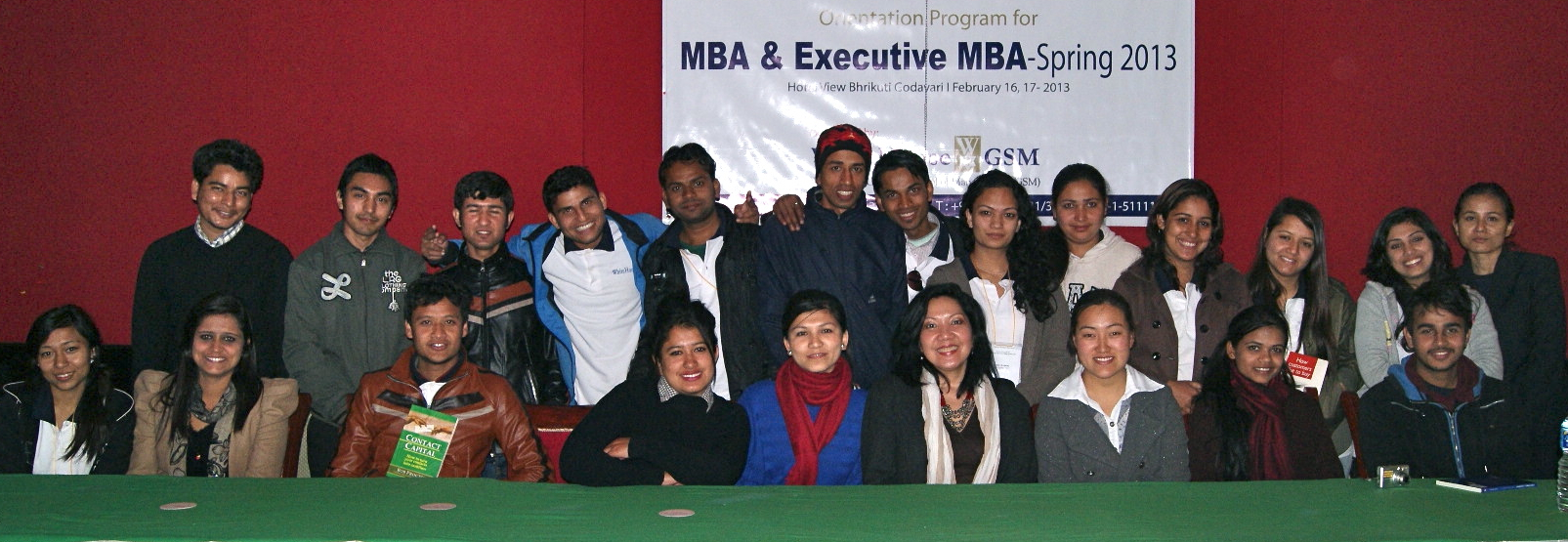
my class

(the author, front seat 4th from Right, with her MBA class in Kathmandu)

A look at the world

This is a good day because today I made the decision to start my blog. Not long ago, I was asked by a former academic colleague and friend, Nina Rung, upon learning that I’ll be working in Nepal: will you be blogging? Well, Nina, it took a while, but here it is.

Finding oneself in another part of the world, immersing in a strange society that ceases to be strange with each passing day, compels one to commit passionately to developmental work. In my particular case, it strengthens a resolve to help defend people’s freedoms and their right to safety and security.

The more we look at the world, the more we understand that people’s values differ, and although at times this can be the source of conflict, the higher truth is that we also share common dreams. This has got to be the starting point of all developmental engagement. From this realization, something deeper emerges: a passion for change.

Traveling and immersion entail a preparedness to face risks. And the ability to engage people, to trust their capabilities, even when there are reasons to doubt. And this is only possible if feelings of uncertainty and insecurity are reduced. It helps very much to be equipped with sufficient knowhow in personal protection, situational awareness, and self-defense. When doubts are reduced, including self-doubt, the barriers to communication and understanding evaporate.

Each day is a lesson of life, like a page in a book still being written. Guided by these discoveries, I am inspired to share my insights, from academic to artistic, from the eclectic to the practical. In the coming weeks and months, I aim to discuss issues in business and public administration that might be useful to my students and practitioners in the field. I aim to share pointers on cultural awareness and travel security to those who might benefit from them. And I plan to emphasize that education is the key to fighting poverty and exploitation, to empowerment and liberation, and the path to safe and secure societies.
A walk through Bakhtapur